You have felt this most of the time on a hot summer day: you opened your car’s door on a hot summer day and immediately felt a sudden wave of heat on your face. The interior of the car is burning, which makes you so uncomfortable the moment you step in; even the AC takes a few minutes to make the interior chill. So you must have thought, how can you make the interior chill the moment you step in? Window film is the best solution for you; it is designed in such a way that it blocks all the sunlight that is entering through the glass and helps to maintain the interior temperature. To learn more about window film, read this blog so that you can clearly understand the difference and protect the interior of your car.
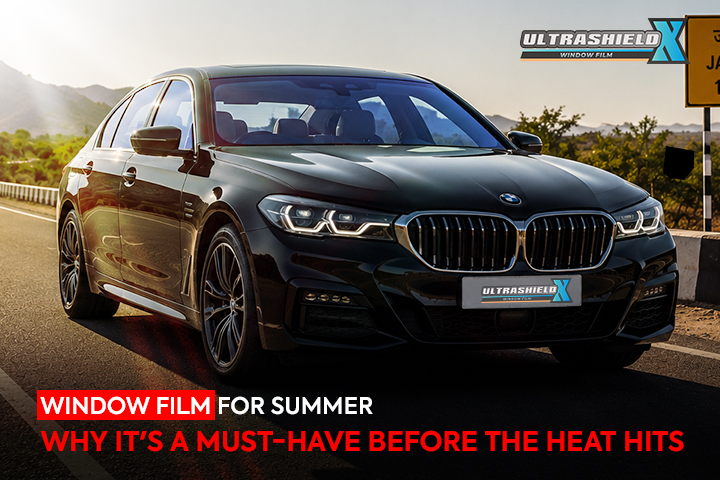
What Is Window Film and Does it Really Work?
Window film is a thin layer that is applied over the glass of your car. It is designed to manage the UV rays that are entering the interior of the car. Depending on its construction, it’s able to reject all the heat radiation, reduce the glare, and block the amount of ultraviolet rays that are entering the car. You can imagine it as an umbrella that blocks the direct rays that are coming to you.
A good film can be helpful for you in these 3 ways:
- Reduce the cabin’s heat
- Harsh sunlight and glare
- Reduce the UV exposure that is directly coming through the glasses
But do you know that not all window films are made for the same purpose? Different kinds of shields serve different purposes. Like a basic dyed film will provide shade and look; on the other hand, a ceramic option is designed to reject strong UV rays and strong heat.
How Window Film Helps to Keep Your Car Cooler in Hot Summer
Is it true that window film actually reduces the heat? Yes, it actually works, and it is one of the best ways to reduce heat, but it actually depends on the film technology, glass, sunlight exposure, and installation quality.
-
Helps to reject the heat
Infrared radiation is one of the major causes that makes your car feel hot when sunlight enters the car through the glass. Good-quality films are used to reduce the heat before it even enters the cabin.
This is the main reason why premium car window films are different from normal dark tint ones. It’s not just about making the glass darker but also reducing the heat. Some advanced IR ceramic film can block the entire heat (up to 99%) while giving different levels of visible light and heat reduction depending on the option that you choose.
-
It reduces the amount of solar energy
A good quality of film can block all the solar energy before it even enters the car. This is really effective if you have parked your car outside for hours. For example: Two identical cars are parked outside next to each other. One has normal glass, and the other one has a high- performance film. Now, both of them are placed under the same conditions, but the film that has film has an additional barrier against the sun.
You can clearly see the difference when you come back and turn on the AC. The one that is without film has already captured a lot of heat, so it will take a lot of time to cool down. On the other hand, the one that has a protective film will cool down in a few seconds; hence, the temperature will be maintained.
-
Makes the AC even more effective
When less heat is entered through the window, the AC cools down more and maintains the overall temperature of the car. This does not mean that the film saves your fuel and AC. Instead of this it helps to reduce the heat that has been captured.
Why do Window Film and UV Protection Matter?
Ultraviolet rays are very harmful; you may not feel it the same way you can sense the heat, but if you park your car for a long time in the UV rays, it can surely lead to fading and deterioration of the interior of the car. A high- quality window film can be very helpful in blocking these ultraviolet rays.
Constant sunlight and the rays can affect these parts of the car:
- Dashboard Surface
- Leather and fabric seats
- Door trims
- Other interior materials
All these factors make the glass protection film an important part of the vehicle when we talk about interior care for the vehicle.
Protecting passengers from UV exposure
A film that offers strong UV protection also guarantees to reduce a large amount of UV radiation that is entering through the glass. This is one of the main reasons why window tint film is more than just appearance. The shade you see from the outside does more than that.
Does Window Film Reduce Glare While Driving?
Have you also faced the sun’s harsh glare while driving? You must know how distracting it can be. You have often seen it on bright summer days: the road starts reflecting buildings, etc. That makes the driving experience uncomfortable because the vision is not clear.
A good window film can reduce the glare while maintaining visibility, and it’s all based on the film’s VLT and design. High-performance IR ceramic films have different variations that have different glare reduction; that’s why the look is not the problem; the same-looking film can actually work differently from each other. This is why you should not choose a film based on its darkness only.
While choosing a film, you should always check for the balance between:
Heat Rejection + UV Protection + Glare Reduction + Visibility
Types of Window Film for Cars: Which One Should You Choose?
Every film uses different technology; before choosing the right automotive window film, you should first know the basic difference then choose the right film for you.
| Film Type | Main Purpose | Heat Rejection | Appearance | Best Fit For |
| Dyed Film | Shade and comfort | Moderate | Darker look | Budget friendly |
| Metalised Film | Heat and glare control | Good | Reflective | Heat focused |
| Ceramic Film | Heat and UV rejection | High | Natural/ Clear | Premium daily usage |
| IR Ceramic Film | Solar heat rejection | Very High | Options available | Hot climates and comfort |
UltraguardX IR range has several options with different VLT levels, from darker to lighter variants, while also neglecting the UV rays too.
So now, if you are choosing the best car window tint, you should look for the film quality, not just the darker shade.
What Should You Check Before Choosing a Window Film for Your Car?
Before choosing the window film for your car, you should know these specifications :
Infrared Rejection (IR)
IR rejection is used to reject heat radiation. If your major concern is heat, then you should always check the IR of the film.
UV Rejection
Always choose a film that has a strong UV rejection capability, which will help to protect the interior of your car.
VLT
VLT stands for the visible light transmission; it helps to tell you how much light will enter through the glass. Higher VLT means that there will be more visible light, and a lower VLT means the film will look dark.
Total Solar Energy Rejection
TSER tells you how much total solar energy the film can block. When you start comparing different films, it’s really important to check the IR rejection, UV rejection, VLT, and TSER all together instead of just going on the look: this one looks darker, I will buy this one – NO!
Is Window Film Legal in India?
Not just in India, but anywhere, you should always follow the rules and regulations. Whether this one is right or wrong, you should always check first; the same goes for the film before installing; you should always check whether this shade is allowed or not.
In India, the window film is not based on how expensive and good it is, but it is actually based on the VLT. Front and side glasses are a point of view, in that case, the overly dark film can struggle during the inspection and can lead to penalties.
If you are still confused about the legal rules and want to install it for your car protection, you can just simply ask your local transport authority before installing the film.
Want to know more about the car window tint in India:
ttps://www.ultrashieldx.com/blog/decoding-all-about-car-window-tints-in-india/
How to Maintain Your Window Film After Installation
Once you have installed window film, you have to maintain it too. The maintenance is also very simple after installation; you have to always use a microfiber cloth and a non- abrasive glass cleaner. Avoid using any harsh chemicals or hard, rough cloth on the surface; it will cause a lot of scratches on the surface. If you notice any kind of bubble, peeling of the film, or decoration, don’t try to peel it off by yourself; always contact the professional installer to handle the situation.
Why Window Film Makes Sense for Indian Summers
If you drive in cities like Delhi, Noida, Ahmedabad, Jaipur, or Hyderabad, these cities are more exposed to heat, and in this situation, if you park your vehicle outside, the exterior and interior of the car are going to be damaged, but when you open the car, you can feel the heat captured inside. To get rid of this, window films are used that not only reduce the heat but also protect the interior of the car.
It helps to reduce the heat coming from the glass, reduce glare, and provide UV protection that makes the cabin more comfortable.
Conclusion
Driving in summer can be quite uncomfortable if your car is burning inside, even if the AC is on blast. A good window film can help protect you from such heat, block UV rays, cut glare, and help to keep the car’s interior cool. Overall, you have to choose the right film based on VLT and heat rejection, not just going by the looks or how dark the sheet looks.
For Indian summers, IR ceramic films are the best and smartest choice for better performance and comfort. UltrashieldX offers an IR ceramic film solution that is designed especially for strong heat rejection, UV protection, and glare control.
Don’t let the summer take over your car! Button: Explore UltrashieldX Window Film
FAQs on Window Film for Summer
Q. Which car film is best for summers?
Ceramic and IR ceramic films are considered the best for summers because of their ability to reject heat while providing UV protection.
Q. Does car window tinting protect the car interior?
Yes, a good quality film with a strong UV rejection can help to reduce the UV exposure that contributes to fading and aging of interior materials.
Q. Can automotive window film reduce glare?
Yes, depending on its construction and VLT, a good quality film can reduce the harsh sunlight and help to improve visual comfort while driving.
Q. How long does a window tint last?
The particular time is not specified, but if you are using a good quality film, with correct installation and maintenance, then it can last for years.
0 Comments